Valuable stamps by country: 17 classic examples and what they sell for
Real value in an ordinary collection is most often found among classic stamps of the 1840s to 1900s, especially a country's early issues. The 17 examples below, one per country, have a catalogue value, dealer price or auction result of roughly US$80–330 each for an ordinary copy: not millions, but real money. What your own copy is worth depends on its condition, and expensive classics are often forged or repaired, so get an expert opinion before you sell.
17 classic stamps and their values
Each row is a real stamp with a public-domain image. The value column says what the figure is: a catalogue value (the price a catalogue lists, usually well above what ordinary copies change hands for), a dealer price (what one dealer asks) or an auction result (what one copy actually sold for). All figures are for one ordinary copy, used unless the row says otherwise, and were checked on 27 November 2026. Local-currency figures are converted to US dollars at the rates of that date.
| Image | Stamp | Value | What the figure is | Source |
|---|---|---|---|---|
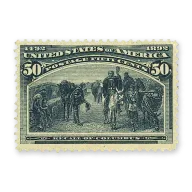 | United States, 1893 50¢ Columbian, “Recall of Columbus” | ≈ $175 | Dealer price for a used copy (Scott 240) | huntingtonstampandcoinshop.com PD-USGov |
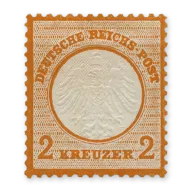 | German Empire, 1872 2 kreuzer orange, small shield eagle | ≈ 250 € ≈ US$272 | Catalogue value, used (Michel 15); a dealer asks about €52 for the copy cited | primus-muenzen.com PD-Germany-§134-KUG, PD-1923 |
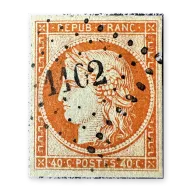 | France, 1850 Ceres 40 c orange | ≈ 200 € ≈ US$215 | Auction result, used: a pair sold for CHF 380, about CHF 190 each (Yvert 5) † | corinphila.ch CC0 |
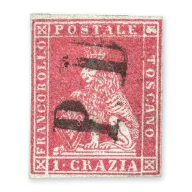 | Grand Duchy of Tuscany, 1851 1 crazia carmine, Marzocco lion | ≈ 275 € ≈ US$299 | Catalogue value, used (Sassone 4); auction lots sell for about €35–61 | live.ferrarioaste.com PD-old-100 |
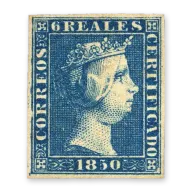 | Spain, 1850 Isabella II, 6 reales blue | ≈ 280 € ≈ US$304 | Auction result 2026, used, with certificate (Edifil 4) | iberphil.com PD-old |
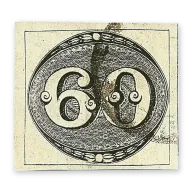 | Brazil, 1843 Bull’s Eye 60 réis | ≈ R$ 1.800 ≈ US$326 | Auction result 2021, used (€300) † | davidfeldman.com PD-old |
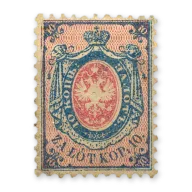 | Kingdom of Poland, 1860 Poland No. 1, 10 kopecks | ≈ 1000 zł ≈ US$261 | Auction result 2014, used (€240) † | davidfeldman.com PD-old |
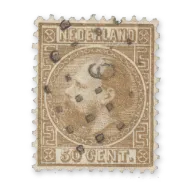 | Netherlands, 1867 William III, 50 cent gold | ≈ € 180 ≈ US$197 | Catalogue value, used (NVPH 12) † | stampworld.com PD-old-100 |
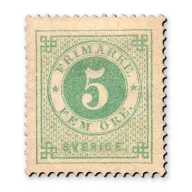 | Sweden, 1872 5 öre green, ring type | ≈ 3 200 kr ≈ US$305 | Catalogue value for an unused copy with gum (Facit 19a, 2024); used about SEK 350 | jaysmith.com CC0 |
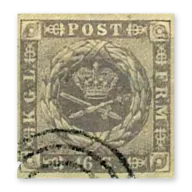 | Denmark, 1854 16 skilling grey-lilac | ≈ 1.200 kr. ≈ US$170 | Dealer price $137 (F-VF), catalogue value $190, used (Scott 6) | jaysmith.com PD-old-100 |
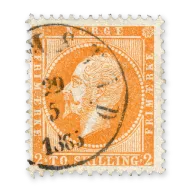 | Norway, 1857 Oscar I, 2 skilling yellow | ≈ 1 800 kr ≈ US$165 | Dealer price, used: $139–180 (Scott 2) | jaysmith.com PD-old-100 |
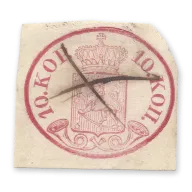 | Finland, 1856 10 kopecks, oval coat of arms | ≈ 340 € ≈ US$330 | Auction result 2022, used, with certificate (€340) † | davidfeldman.com PD-FinlandStamp |
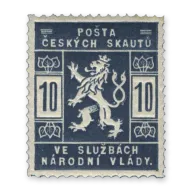 | Czechoslovakia, 1918 Scout Post 10 h blue | ≈ 1 800 Kč ≈ US$80 | Catalogue value, with certificate (Pofis SK1) | filatelie-klim.com PD-old |
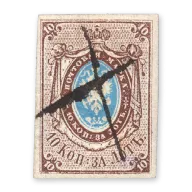 | Russian Empire, 1857 10 kopecks, Russia’s first stamp | ≈ 27 000 ₽ ≈ US$300 | Catalogue value, used (single source) | rusphil.com PD-RusEmpire, PD-old-100 |
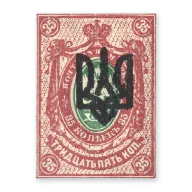 | Ukrainian People’s Republic, 1918 Trident overprint (Odesa type III) on 35 kopecks | no verified price | No verified price for this type; related Odesa trident types catalogue $100–200 | oldlouis.com PD-Ukraine, PD-anon-auto-1996 |
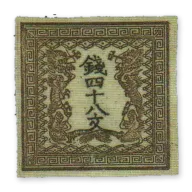 | Japan, 1871 Dragon stamp, 48 mon | 約3万円 ≈ US$206 | Catalogue value, unused (used: $235); five unused copies sold together for €400 † | stampworld.com PD-Japan-organization, PD-1923 |
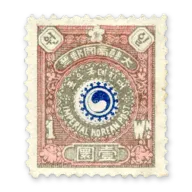 | Korean Empire, 1901 Taeguk definitive, 1 won | no verified price | No verified single-stamp price; the 1901 set of three, used, sold for $475 (catalogue $1,015) | cherrystoneauctions.com PD-South Korea |


† figure read from the source's search summary (the site blocks automated access): check it before relying on it. Download the table as CSV.
What these stamps have in common
- They are early. Thirteen of the 17 were issued between 1843 and 1872, when postal services were young, print runs were smaller than today and far fewer copies were saved.
- Several are firsts. Brazil's 1843 Bull's Eye, Poland No. 1, Russia's 1857 10 kopecks and the 1850 issues of Spain and France sit at or near the start of their country's stamps. A country's first issues attract collectors of that country, which keeps demand steady.
- Some come from states that no longer exist. The Grand Duchy of Tuscany, the Kingdom of Poland and the Korean Empire issued stamps for only a few years, so the supply is fixed.
- None of them is a famous rarity. They were chosen as realistic examples of the "real money" range, not as record breakers. The famous rarities sell for six or seven figures and almost never turn up in family albums.
Why your copy may be worth less (or more)
A value in a table is a reference point, not a price for your stamp. Three things move it:
- Condition. For classic stamps, faults are common: thins, creases, short perforations or margins cut into the design. A faulty copy may sell for a small fraction of a sound one, while a fresh, well-centred copy can sell for more than the catalogue. Our guide to stamp condition grades explains what buyers look for.
- Used or unused. Some classics are worth more used, others unused; the Swedish 5 öre in the table is valued unused, and a used copy is listed at roughly a tenth of that.
- Catalogue versus market. The Tuscany and German Empire rows show the gap: catalogue values around €250–275, while real copies are offered or sold for a fraction of that. Dealers and auction buyers pay for the copy in front of them, not for the catalogue line.
Forgeries, repairs and certificates
Because classic stamps are worth money, they have been forged, repaired, regummed and re-perforated for as long as people have collected them. A stamp that looks like one of the rows above may be a contemporary forgery, a later reprint or a cheaper look-alike from another printing. For anything that could be worth more than a few dollars, buyers expect an expert opinion or a certificate from a recognised expert or expertising committee. Read how much are my stamps worth? for how to get one and how to find real sold prices.
How to check your own stamps
- Identify the country from the inscription (see how to identify a stamp's country) and note the denomination, colour and design.
- Measure the perforation with a perforation gauge and look for a watermark: they often separate a common printing from a scarce one.
- Judge the condition honestly, front and back, under good light.
- Compare with a catalogue and with real sold prices, not asking prices.
- If a stamp still looks promising, ask an expert before you sell.
PhilaScan can do the first steps from a photo: it identifies the stamp, shows its perforation and watermark, gives a value tier for free and, with Pro, value estimates by condition. These are estimates, not appraisals, and the same caution about forgeries applies.
Sources and method
We chose one classic stamp for each of the 17 languages the PhilaScan app speaks, looking for a recognisable issue with an ordinary-copy value of about US$200–300 and a public-domain image. Values come only from the source linked in each row: dealer price lists, auction records and catalogue values quoted by dealers. Where a source site blocks automated access, the figure was read from its search-result summary and is marked †; for Ukraine and Korea we found no reliable single-stamp price and show none rather than guess. Images are from Wikimedia Commons (public domain or CC0); the licence in each row links to the image page with the full credit. The table is also available as CSV. Corrections are welcome at support@kruk-apps.com.
Frequently asked questions
Which old stamps are worth money?
Mostly classic stamps from the 1840s to about 1900 in sound condition, especially a country's early issues, stamps of states that no longer exist, and scarce varieties of perforation, watermark or colour. Most 20th-century stamps in family albums are common.
What is the most valuable stamp in the world?
The British Guiana 1c magenta of 1856, the only known copy, sold at Sotheby's in New York in June 2021 for US$8.3 million (Wikipedia).
Is my stamp worth the catalogue value?
Usually not. Catalogue values are reference prices for good copies; ordinary or faulty copies often sell for a fraction of them. Look at real sold prices for copies in the same condition.
Are first stamps of a country valuable?
Often more than later issues, because collectors of that country all want one and early print runs were small. Common first issues exist too, and condition still decides the price.
Where do the values on this page come from?
Each value comes from the dealer list, auction record or catalogue quote linked in its row, checked on 27 November 2026. Figures marked † were read from a search-result summary and should be checked before you rely on them.
Identify your stamps with PhilaScan
Photograph a stamp to see its country, year, issue, perforation and watermark, with a value tier. Your first identification is free; value estimates by condition come with PhilaScan Pro. Estimates, not appraisals.
Coming soonon the App Store